Oral Surgery in Clearfield, UT
Some dental problems go beyond a routine cleaning or filling. They require a higher level of care performed with precision and skill. At Hillside Dental in Clearfield, UT, our team provides oral surgery services in a comfortable, familiar environment you already trust. Call us today at (801) 776-8441 to schedule your visit or book a free consultation.

What Is Oral Surgery?
Oral surgery refers to any procedure that involves the hard or soft tissues of the mouth and jaw. This includes tooth extractions, bone grafting, and implant preparation. These procedures are often necessary to restore oral health, prevent further damage, or prepare the mouth for restorative treatment like dental implants.
Many patients feel anxious about oral surgery. Our team understands that. We use modern techniques, clear communication, and appropriate anesthesia options to keep every procedure as comfortable and stress-free as possible. You are in good hands from the moment you walk in.
Our Oral Surgery Services
Tooth Extractions
Losing a tooth is never the first choice. Our team always explores every option to save a natural tooth before recommending removal. But sometimes an extraction is the safest and most practical solution for your long-term oral health.
A tooth may need to be extracted when:
- Decay has destroyed too much of the tooth to be restored
- A tooth is severely cracked or broken below the gumline.
- Advanced gum disease has loosened the tooth beyond repair.
- A tooth is impacted and causing pain or crowding.
- Baby teeth are blocking the path of permanent teeth.
- Teeth need to be removed to prepare for orthodontic treatment
- A failed root canal leaves the tooth unrestorable.

What to Expect During a Tooth Extraction
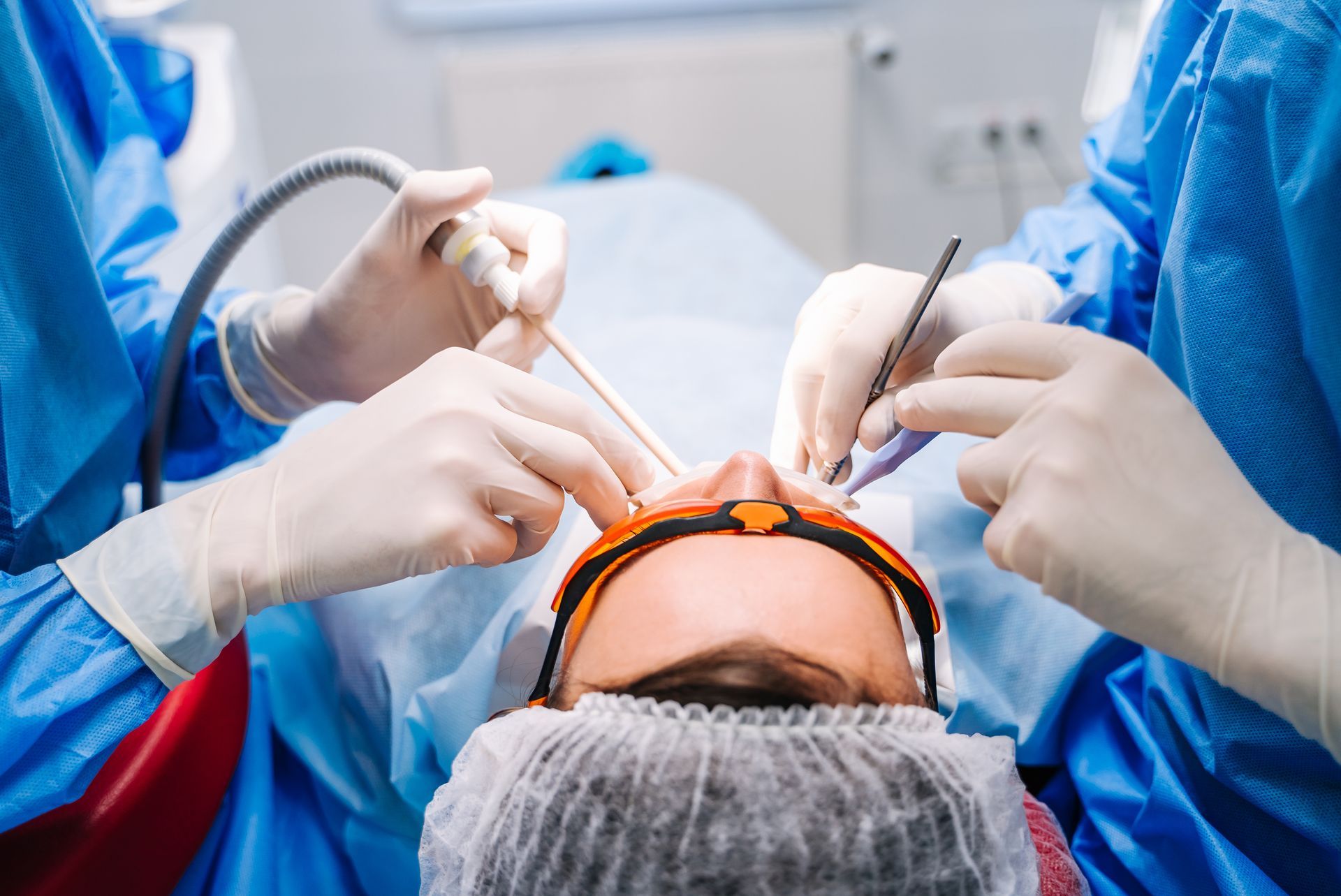
We numb the area thoroughly with local anesthesia before we begin. You will feel pressure during the procedure but should not feel pain. For simple extractions, the tooth is gently loosened and removed in one piece. Surgical extractions involving impacted or broken teeth may require a small incision in the gum tissue.
Most patients recover within a few days. We provide complete aftercare instructions and are available to answer any questions during your recovery. If you are interested in replacing the extracted tooth, we will discuss implant and restoration options during your visit.
Wisdom Tooth Extractions
Wisdom teeth are the last molars to come in, usually in the late teens or early twenties. They frequently cause problems, including impaction, crowding, infection, and pain. Removing them early prevents more serious complications down the road. Our team performs wisdom tooth extractions with care and precision, keeping your comfort the top priority throughout.

Bone Grafting
When a tooth is lost or removed, the jawbone beneath it begins to shrink. This process happens gradually but has real consequences. It can change the shape of your face, weaken neighboring teeth, and make dental implants impossible without intervention. Bone grafting rebuilds lost bone so your jaw has the strength and volume needed to support implants and maintain your facial structure.
When Is a Bone Graft Needed?
A bone graft may be recommended when:
- You have experienced bone loss after a tooth extraction.
- You want dental implants but do not have enough bone density.
- Gum disease has caused deterioration of the supporting bone.
- A tooth has been missing for an extended period of time.
- Bone loss is affecting the stability of neighboring teeth
Types of Bone Grafts We Offer
Socket Preservation Graft
Placed immediately after a tooth extraction, this graft fills the empty socket and prevents the bone from collapsing. It is one of the most common and straightforward grafting procedures.
Ridge Augmentation
Used to rebuild the height and width of the jawbone after significant bone loss. This creates a stable foundation for implant placement.
Sinus Lift
When upper back teeth are missing, the sinus cavity can drop down into the space where bone once was. A sinus lift adds bone below the sinus to restore the height needed for upper implants.
What to Expect During a Bone Graft
The procedure is performed under local anesthesia. Graft material is placed into the area of bone loss and covered with a protective membrane. Over the following months your body naturally integrates the graft material and new bone forms in its place. Once healing is complete, your jaw is ready to support dental implants.
Recovery is manageable for most patients. Mild swelling and discomfort in the days following the procedure are normal. Our team provides detailed aftercare instructions and monitors your healing at follow-up appointments.
Implant Preparation
Placing a dental implant successfully requires more than just the implant itself. The foundation has to be right. Implant preparation covers the procedures needed to get your mouth ready for a successful implant placement. Without proper preparation, implants are at higher risk of failure. With it, you set yourself up for a result that lasts decades.
What Does Implant Preparation Include?
Implant preparation is different for every patient. It depends on your current oral health, bone density, and the condition of your gums and surrounding teeth. Common preparatory steps include:
Tooth Extraction
If a damaged or failing tooth is still in place, it must be removed before an implant can be placed. We often perform the extraction and begin the grafting process in the same visit to streamline your timeline.
Bone Grafting
As described above, bone grafting rebuilds areas of bone loss so there is enough volume and density to anchor the implant securely. This is one of the most common preparatory steps for implant patients.
Gum Disease Treatment
Healthy gums are essential for implant success. If gum disease is present, it must be treated and resolved before implant placement can proceed. We address this as part of your preparation plan.
3D Imaging and Treatment Planning
Before any surgery we use advanced imaging to map your jaw anatomy with precision. This allows us to plan implant placement in exactly the right position for optimal function and aesthetics.
Frequently Asked Questions About Oral Surgery
Is oral surgery painful?
All oral surgery procedures at Hillside Dental are performed under local anesthesia. You should feel pressure but not pain during the procedure. Post-procedure discomfort is normal and manageable with over-the-counter or prescribed medication.
How long is the recovery after a tooth extraction?
Most patients feel back to normal within two to three days after a simple extraction. Surgical extractions or wisdom tooth removals may take up to a week. We provide full aftercare instructions at your appointment.
How long does it take for a bone graft to heal?
Bone grafts typically take three to six months to fully integrate. The timeline depends on the size of the graft and your body's natural healing process. Your provider will monitor progress at follow-up visits.
Can I get an implant right after an extraction?
In some cases yes. Immediate implant placement is possible when there is sufficient bone and no infection present. In other cases a healing period or bone graft is needed first. Your provider will determine the right approach for your situation.
Will I need someone to drive me home after oral surgery?
For procedures involving sedation, yes. We recommend arranging a ride home in advance. For procedures done under local anesthesia only, most patients are fine to drive themselves.
How do I know if I need a bone graft before implants?
We assess your bone density using X-rays and 3D imaging during your free implant consultation. If a graft is needed, we will explain exactly why and walk you through the process before you commit to anything.
What if I am nervous about oral surgery?
That is completely understandable. Talk to our team about your concerns. We will walk you through every step of the procedure in advance and discuss comfort options to help you feel at ease.

Ready to Take the Next Step?
Whether you need a tooth removed, bone rebuilt, or your mouth prepared for implants, Hillside Dental is here to guide you through every step with skill and care. Call us today at (801) 776-8441 or click below to schedule your visit. We proudly serve patients from Clearfield, Layton, Ogden, Syracuse, Pleasant View, and all of Northern Utah.







